For many older adults in Massachusetts, the ride to a senior center, adult day program, or medical appointment is more than just a trip—it’s a lifeline. But not all transportation services offer the same level of assistance. Some providers stop at the curb and wait. Others walk seniors safely from their door to the vehicle and back again.
For program directors, caregivers, and COA administrators, choosing the right model isn’t just a service decision—it affects attendance, safety, stress levels, and the overall success of your program.
Massachusetts seniors have a wide range of mobility needs, and the wrong transportation model can unintentionally put them at risk.
Below is a clear, practical breakdown of door-to-door vs. curb-to-curb transportation, and how senior programs can choose the model that best supports their community.
What Is Curb-to-Curb Transportation?
Curb-to-curb transportation is the most common model offered by basic ride services and municipal transit programs.
With this model, the driver:
- Arrives outside the home
- Parks at the curb
- Waits for the rider to come out
- Assists only once the rider reaches the vehicle
For seniors who are fully independent and steady on their feet, this can be fine.
But for many older adults in Massachusetts—especially those navigating New England weather, uneven steps, balance challenges, or medical conditions—curb-to-curb creates real risks.
Limitations of curb-to-curb service include:
- No help getting to the door
- No support with stairs, walkers, or mobility devices
- Higher fall risk in winter months
- Confusion for seniors with memory loss or dementia
- Missed pickups if a senior needs extra time to exit the home
- No “handoff” or communication with caregivers
In short:
It’s designed for convenience, not safety.
What Is Door-to-Door Transportation?
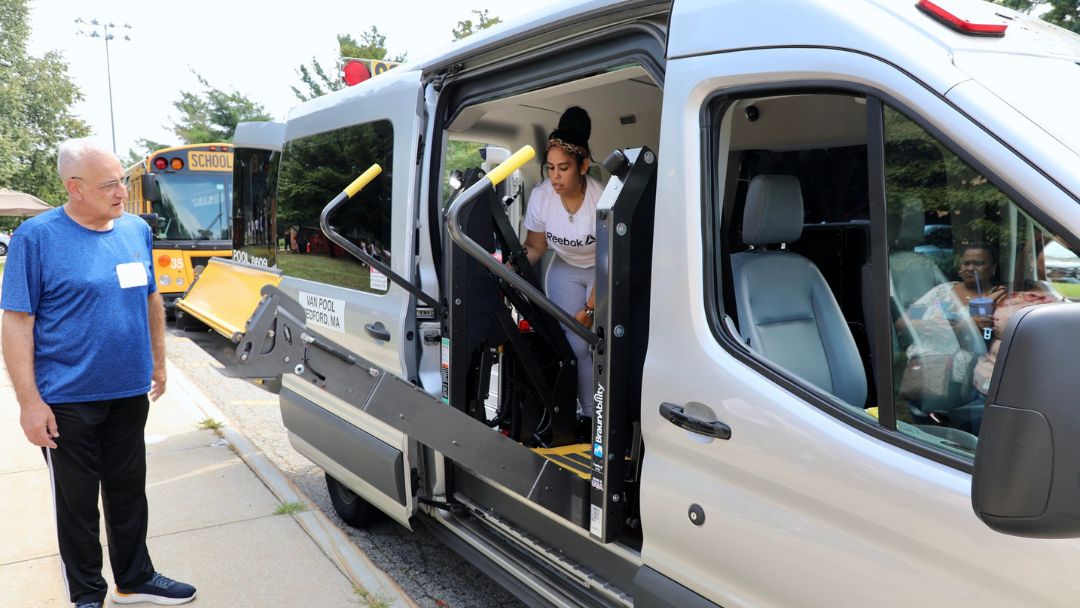
Door-to-door transportation offers a much higher level of support and is the model preferred by most Massachusetts senior centers and adult day programs.
With door-to-door service, the driver:
- Walks to the senior’s front door
- Offers steadying assistance during the walk to the vehicle
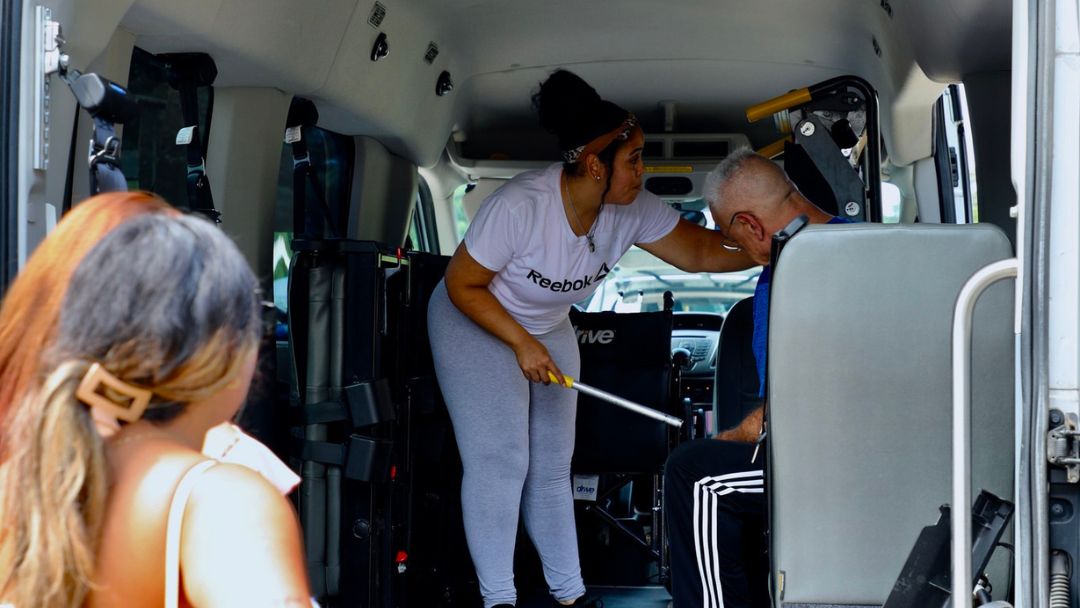
- Assists with steps, ramps, walkers, and mobility devices
- Provides a safe, calm boarding process
- Escorts the rider into the destination building, if needed
This service is built for seniors who need:
- Extra time
- Extra stability
- Extra reassurance
- Extra oversight
And that describes a large portion of Massachusetts’s aging population, especially those living alone.
Door-to-door transportation reduces risk, improves attendance, and gives families peace of mind.
Why the Transportation Model Matters in Massachusetts
1. Weather is a real safety concern.
Ice, snowbanks, wet leaves, slush—Massachusetts weather creates constant slip hazards.
Door-to-door dramatically reduces fall risk.
2. Many seniors live in older homes.
Narrow steps, uneven walkways, and steep porches are common.
A curb-to-curb driver can’t assist with these challenges.
3. Cognitive decline requires closer support.
Seniors with memory loss may forget:
- Pickup times
- What vehicle they’re looking for
- How to get outside safely
Door-to-door ensures no one is left behind or confused.
4. Families and caregivers need reassurance.
Massachusetts families often work long hours.
Door-to-door service keeps them informed and reduces anxiety.
5. Program attendance depends on reliable support.
When transportation is stressful or unsafe, seniors stop coming.
Door-to-door keeps participation high.
How Van Pool Delivers True Door-to-Door Support
Door-to-door service is only as safe as the training behind it.
Van Pool’s senior transportation program includes:
✓ Drivers trained in mobility assistance
Safe support for:
- Walkers
- Canes
- Wheelchairs
- Balance challenges
- Slow or cautious walkers
✓ Weather-aware pickup procedures
Drivers adjust for:
- Ice
- Snow
- Poor visibility
- Unsafe walkways
- Slippery porches
✓ Gentle boarding and securement practices
Riders board without pressure, and drivers ensure every mobility device is secured correctly.
✓ Personalized rider notes
Drivers know who:
- Needs extra time
- Benefits from a calm greeting
- Prefers assistance on the left or right side
- Has balance challenges on stairs
✓ Direct communication with caregivers and staff
The program always knows:
- Pickup issues
- Delays
- Schedule changes
- Safety concerns
This level of care is what reduces missed appointments, improves consistency, and keeps seniors engaged and independent.
So Which Model Is Right for Your Program?
If your seniors are:
- Fully mobile
- Confident on stairs
- Living with family
- Comfortable waiting outdoors
…curb-to-curb might be enough.
But if your seniors are:
- Using walkers or mobility devices
- At risk of falls
- Living alone
- Managing cognitive challenges
- Navigating New England weather
- Needing reassurance and routine
…then door-to-door is the safer, more appropriate model every time.
Most Massachusetts senior centers eventually move toward door-to-door because it reduces risk, protects participants, and increases attendance.
Final Thoughts
Transportation isn’t just about getting seniors to programs—it’s about getting them there safely, confidently, and consistently.
The transportation model you choose shapes:
- Health outcomes
- Attendance
- Program stability
- Family trust
- Senior independence
- Overall quality of life
Door-to-door service ensures that older adults don’t face unnecessary risks simply trying to get to the resources that help them thrive.
Let’s Keep Your Program Moving
If your senior center or adult day program needs dependable, communicative door-to-door transportation, Van Pool is here to support you.
Request a Quote today and learn how we can help your riders stay safe, active, and connected — every day of the week.